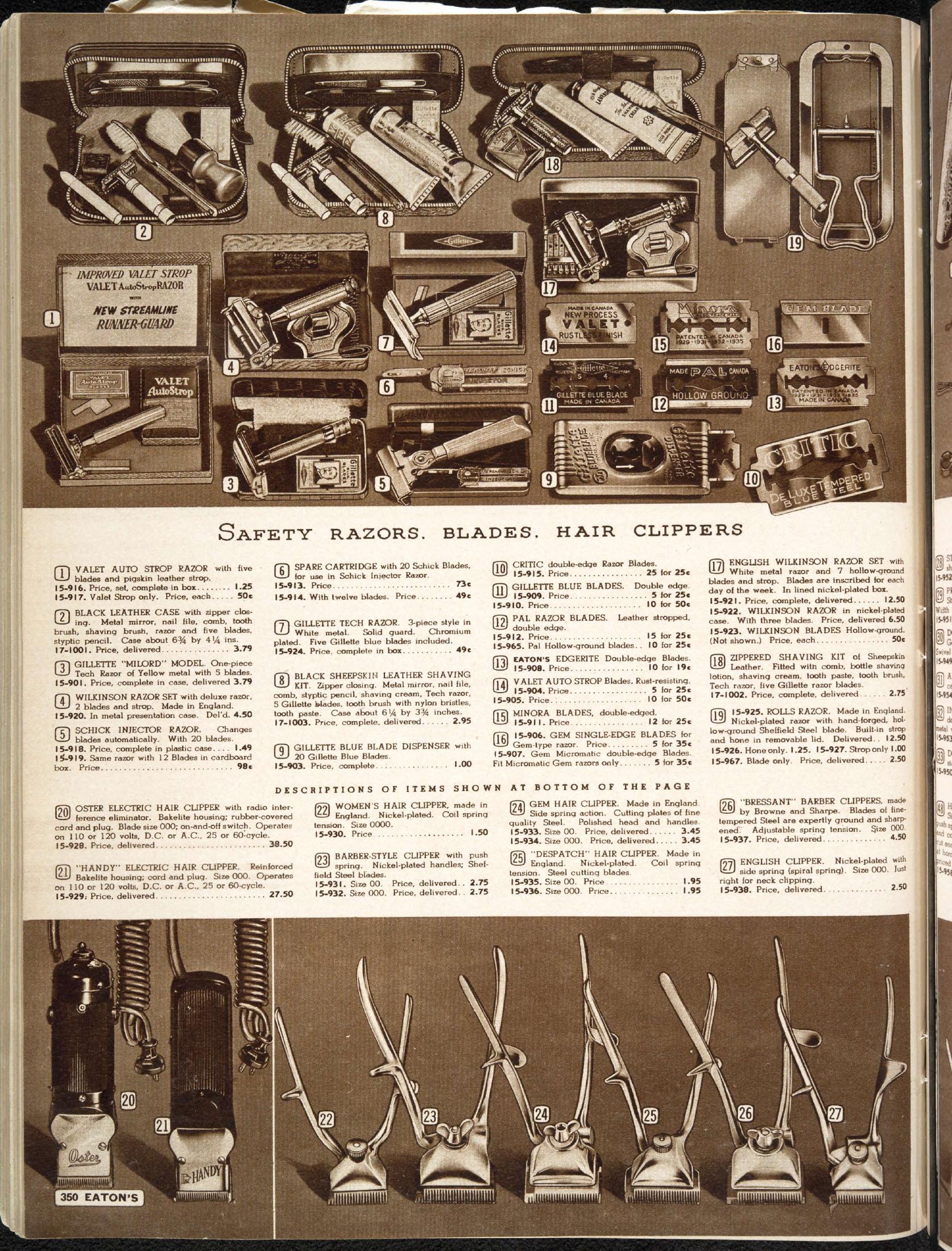
Canadian-made razor blades
Gillette, Valet, PAL and Eaton’s Edgerite blades are marked as made in Canada in the illustrations. Eaton’s own Edgerite blades cost 19¢ for ten.
Shaving goods for Canadians.
Shaving goods in old catalogues, advertisements and newspaper clippings.
Prices as printed.
Gillette, Valet, PAL and Eaton’s Edgerite blades are marked as made in Canada in the illustrations. Eaton’s own Edgerite blades cost 19¢ for ten.
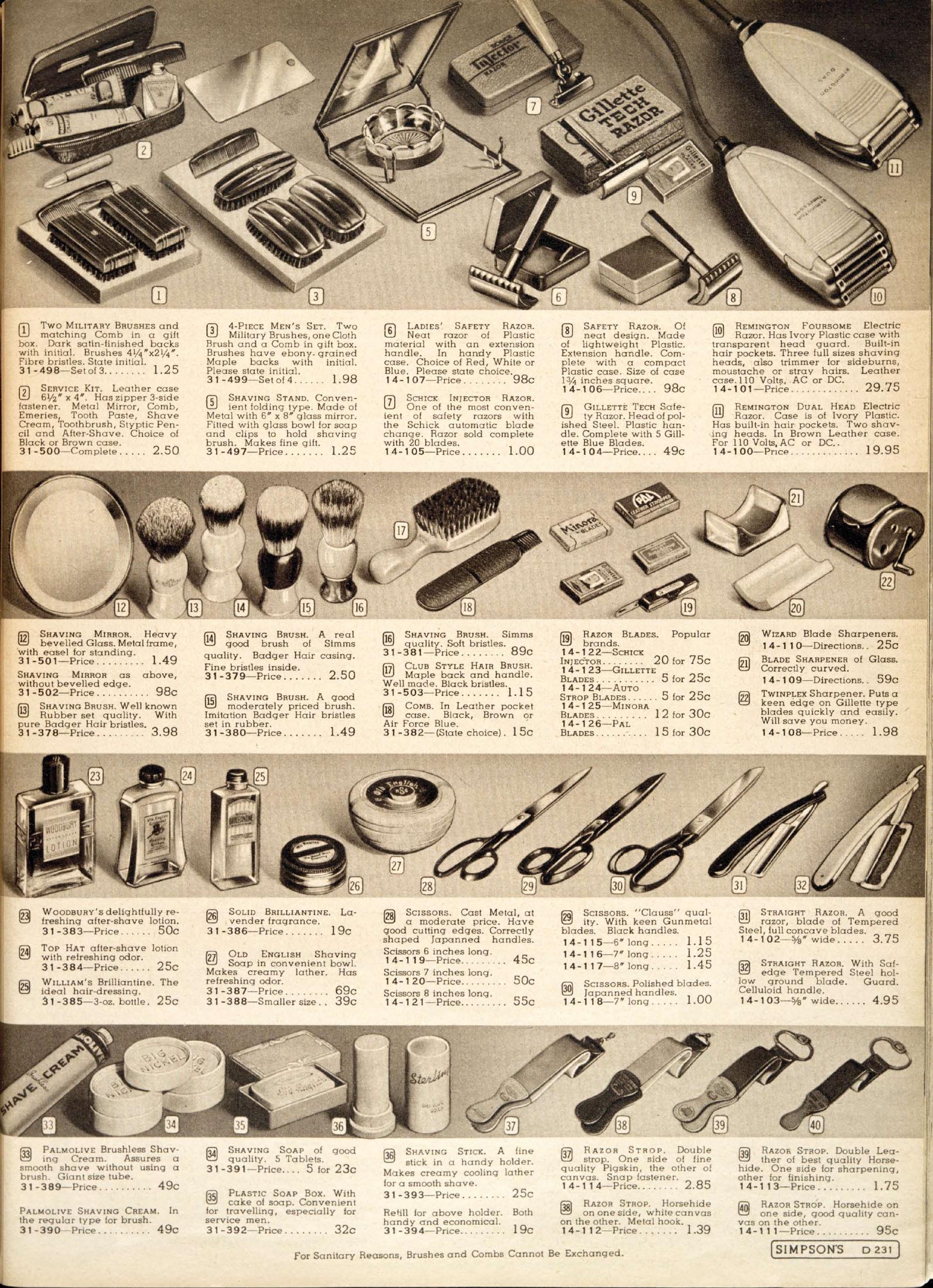
Simpson’s listed straight razors, safety razors and electric shavers on the same page in 1945. The Gillette Tech cost 49¢ with five blades; the Schick injector cost $1 with twenty. Remington electric shavers were listed at $19.95 and $29.75.
The same page includes Simms shaving brushes. The Simms brush company moved to Saint John, New Brunswick, in 1872.
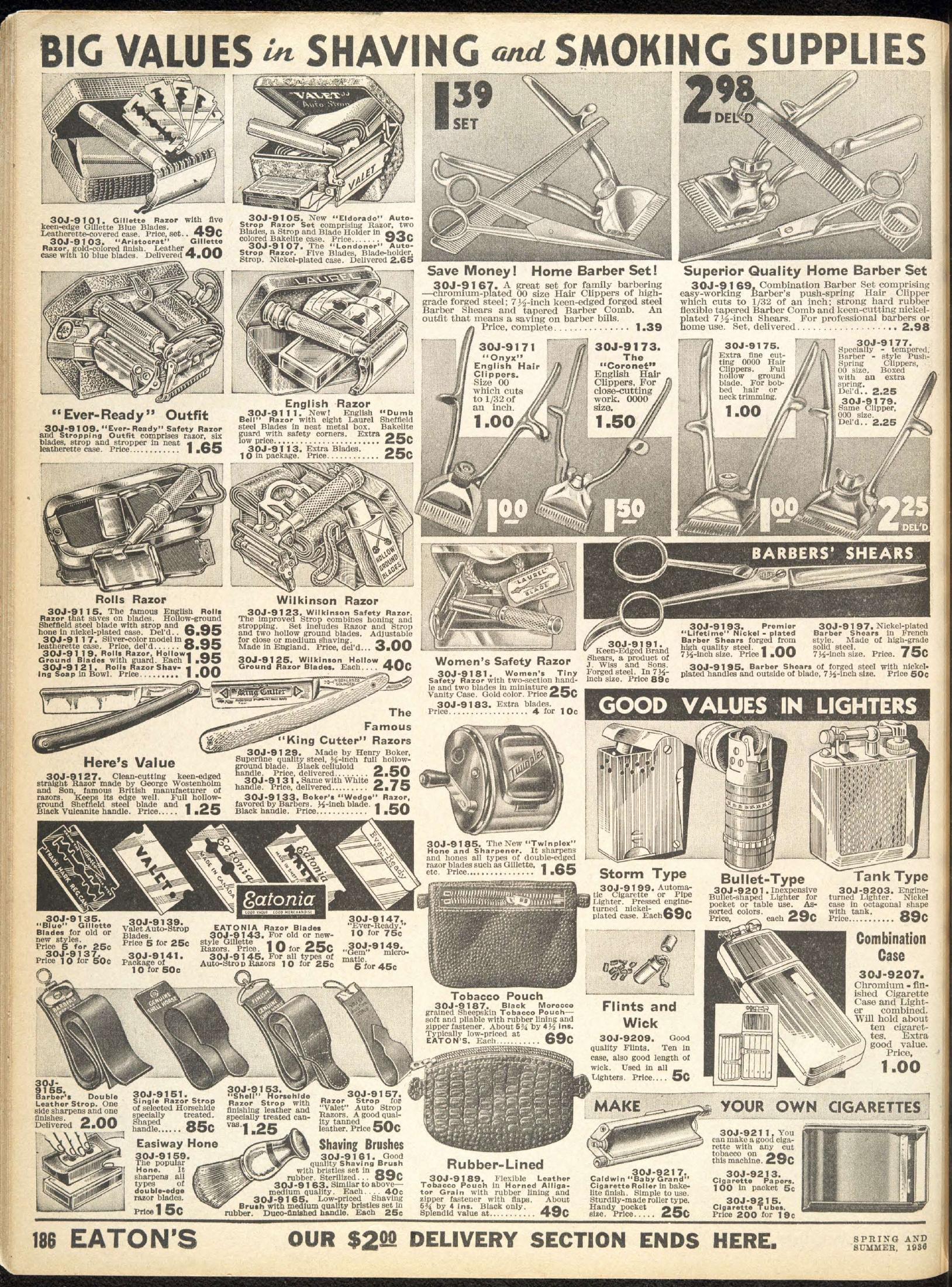
Eaton’s offered a gold-coloured safety razor with a two-section handle and two blades in a miniature vanity case for 25¢. Four extra blades cost 10¢.
This listing is discussed in G. Bruce Retallack’s study of razor design and gender (1999).
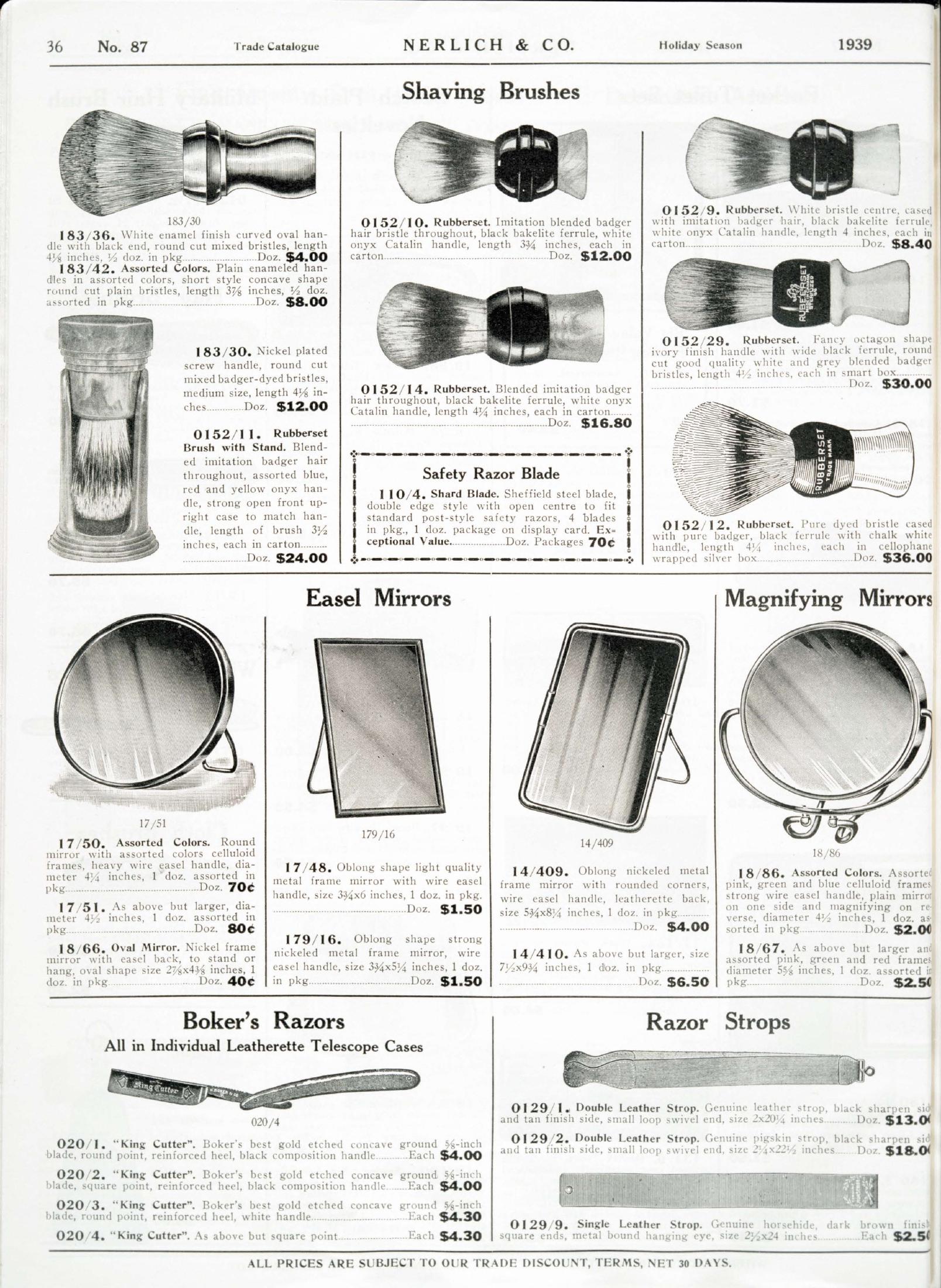
Nerlich offered Rubberset brushes with several bristle mixtures and handle styles. Prices were quoted per dozen and were subject to a trade discount.
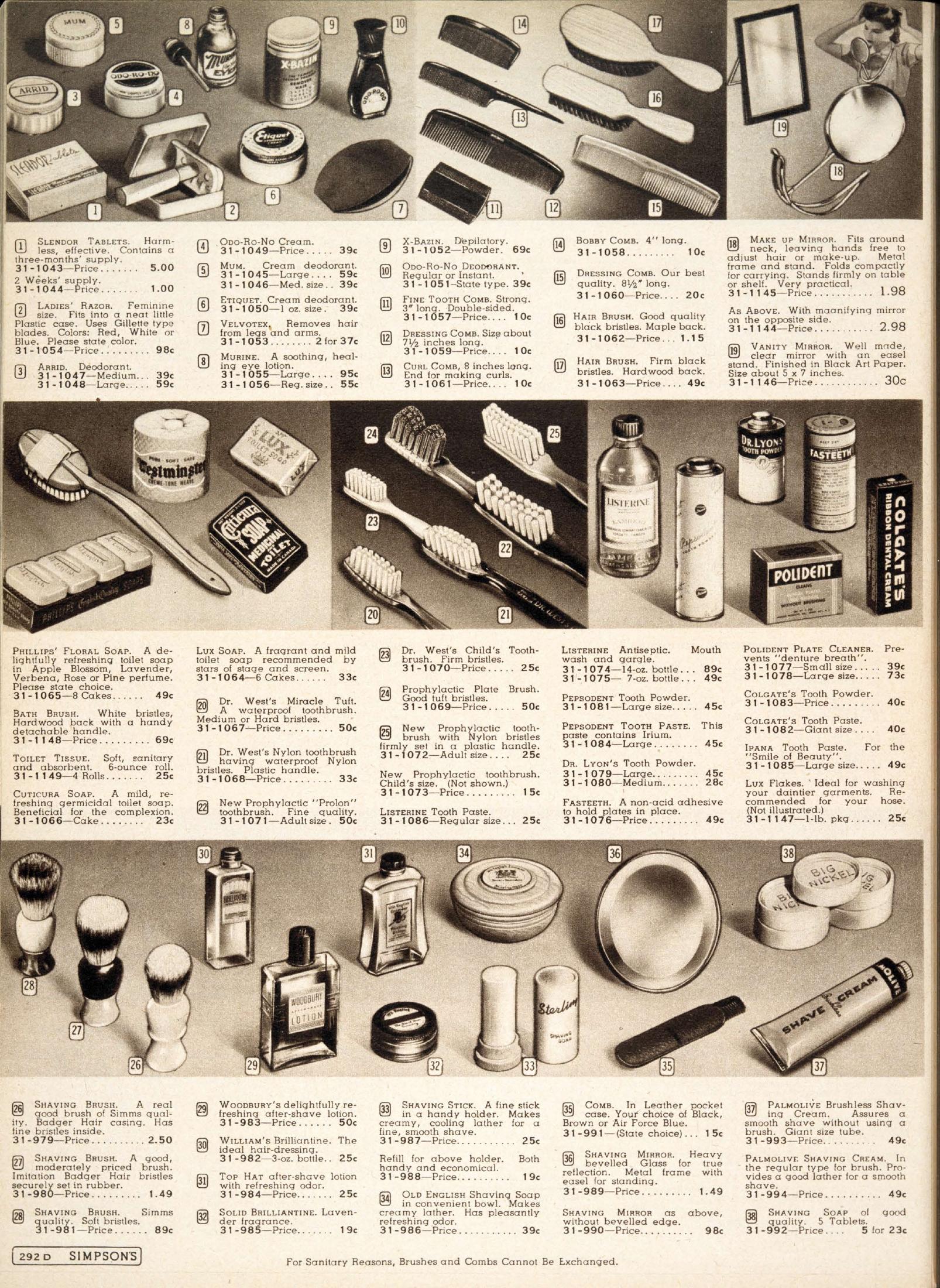
A shaving stick with a holder cost 25¢. A replacement stick for the same holder cost 19¢. Soap was also sold in bowls and as loose tablets.
Woodbury’s after-shave lotion cost 50¢ and Top Hat cost 25¢. Williams’ brilliantine, sold as a hair dressing, appeared alongside them.
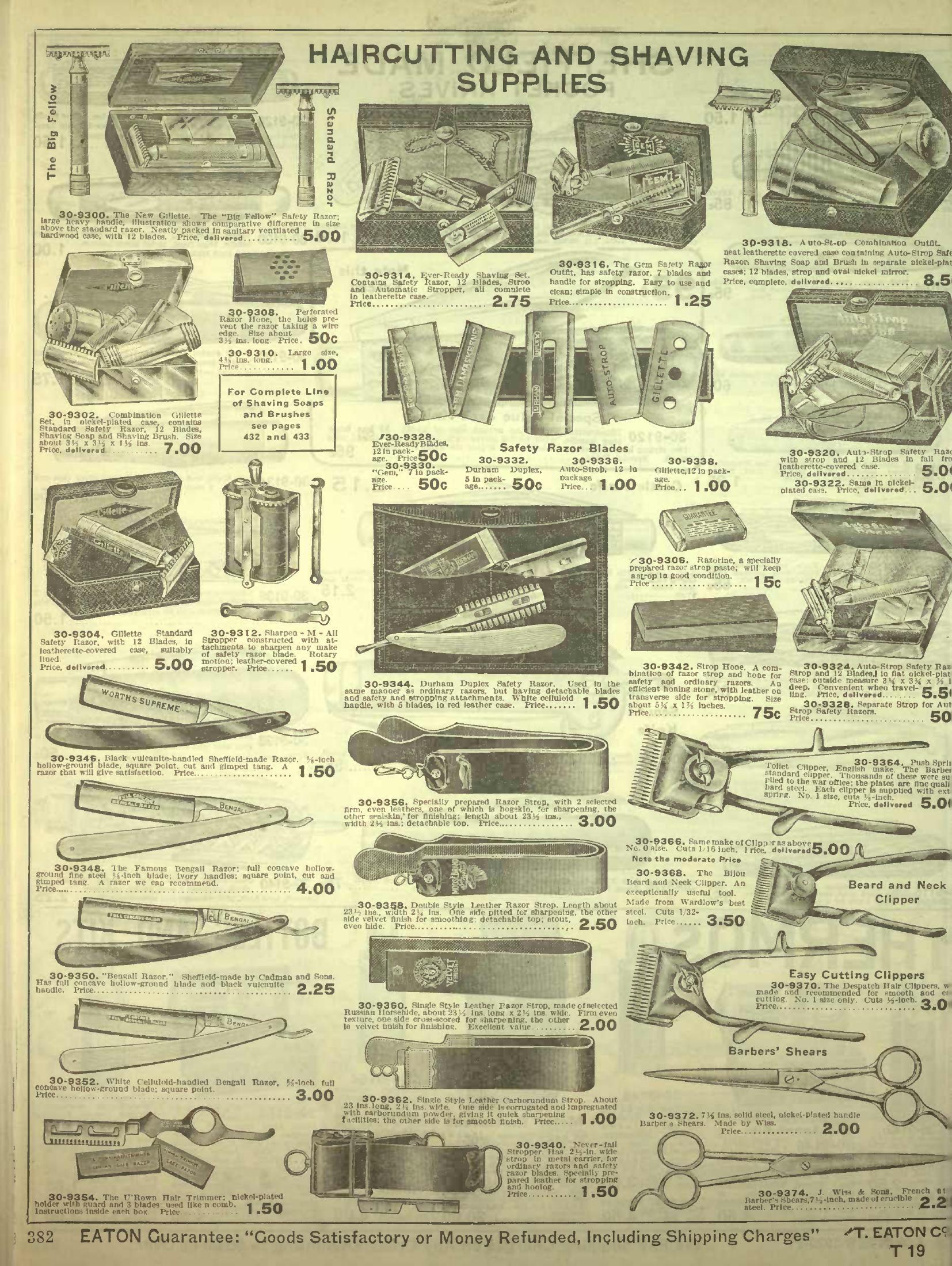
The Gillette “Big Fellow” cost $5 with twelve blades. The $7 combination set added shaving soap and a brush to a standard razor and blades.
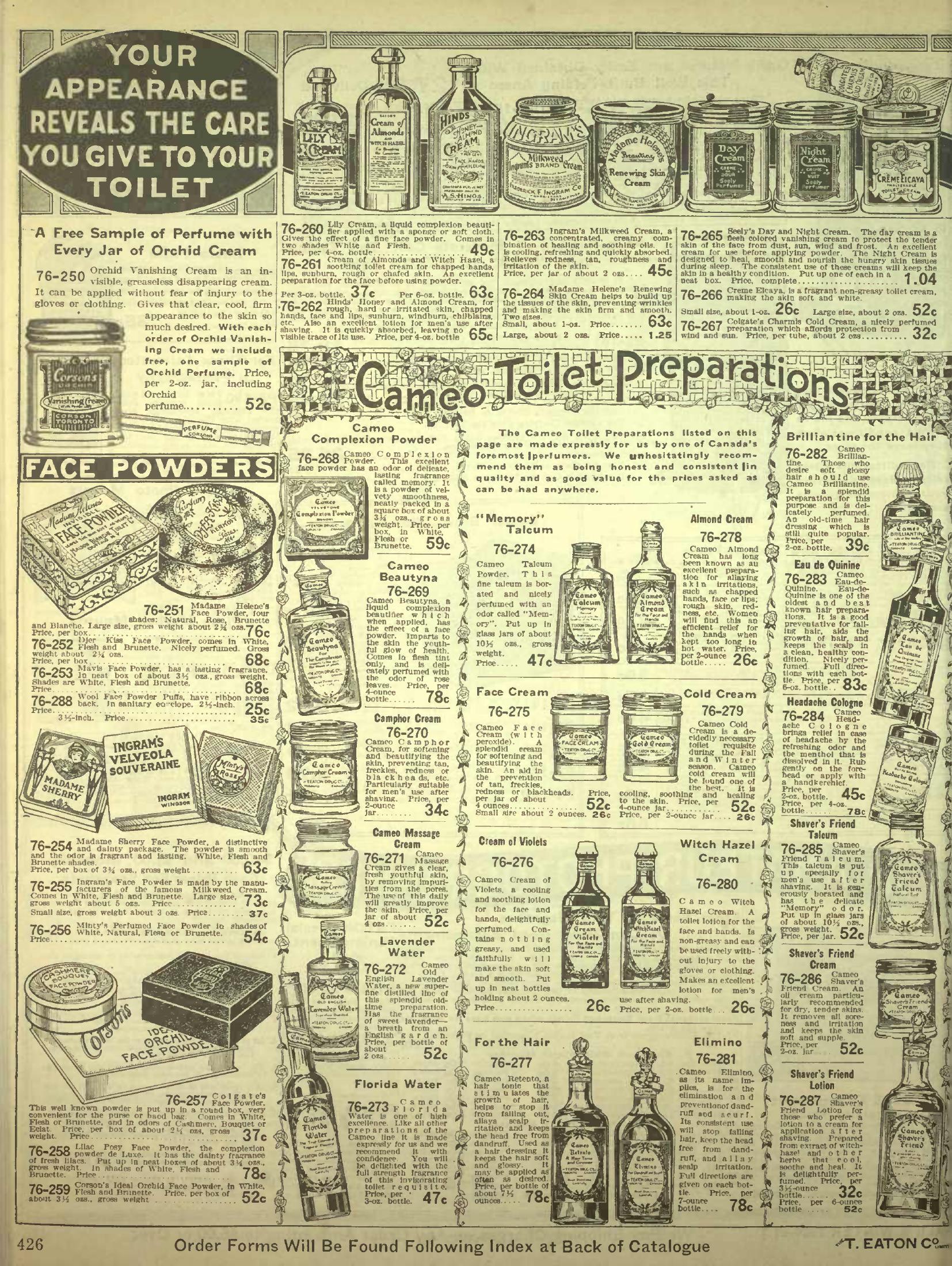
Cameo’s Shaver’s Friend came as talcum, cream or lotion. The lotion, sold for use after shaving, started at 32¢.
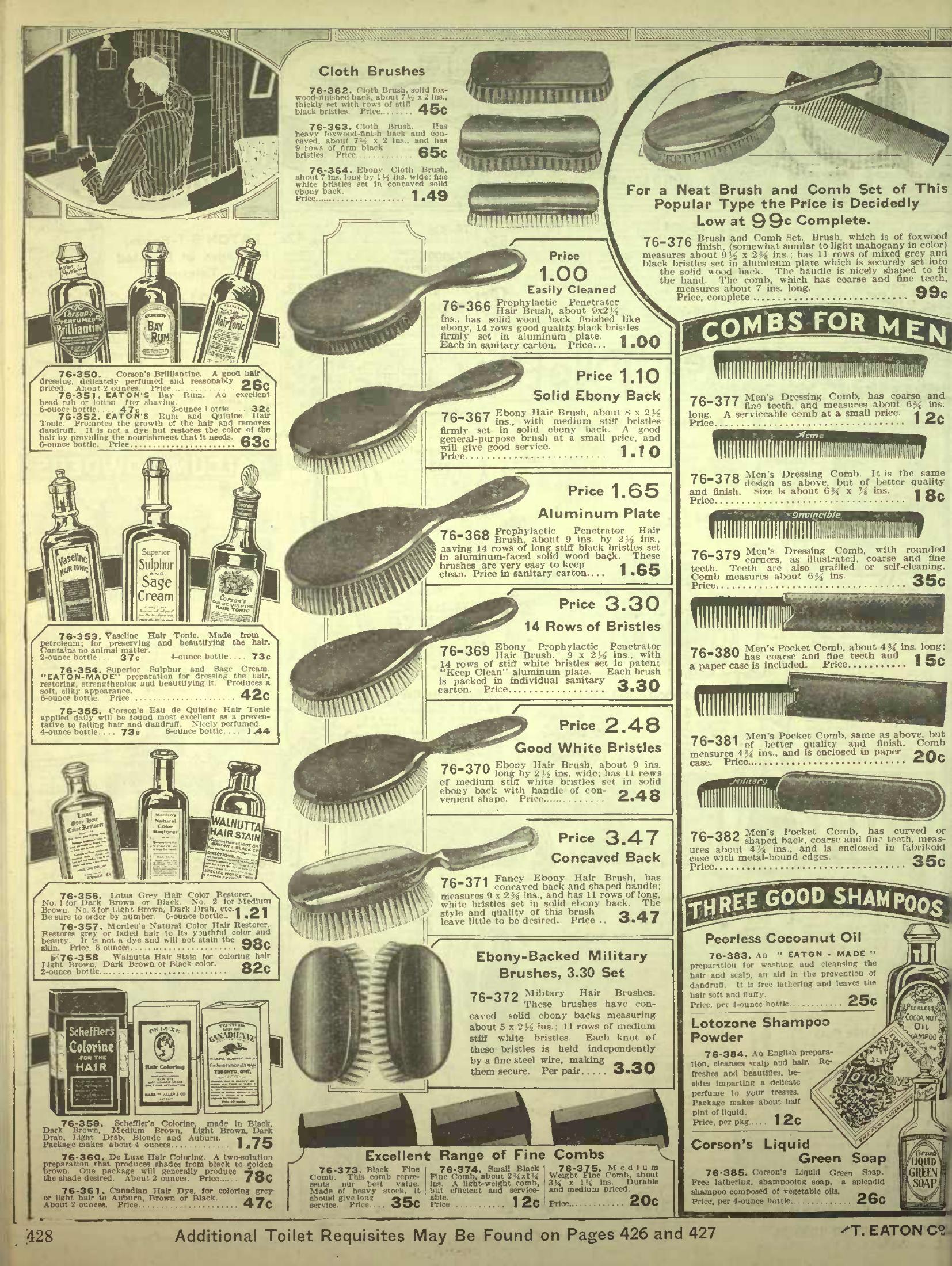
Eaton’s Bay Rum cost 32¢ for three ounces and was advertised as a head rub or after-shaving lotion. It shared the page with brilliantine and rum-and-quinine hair tonic.
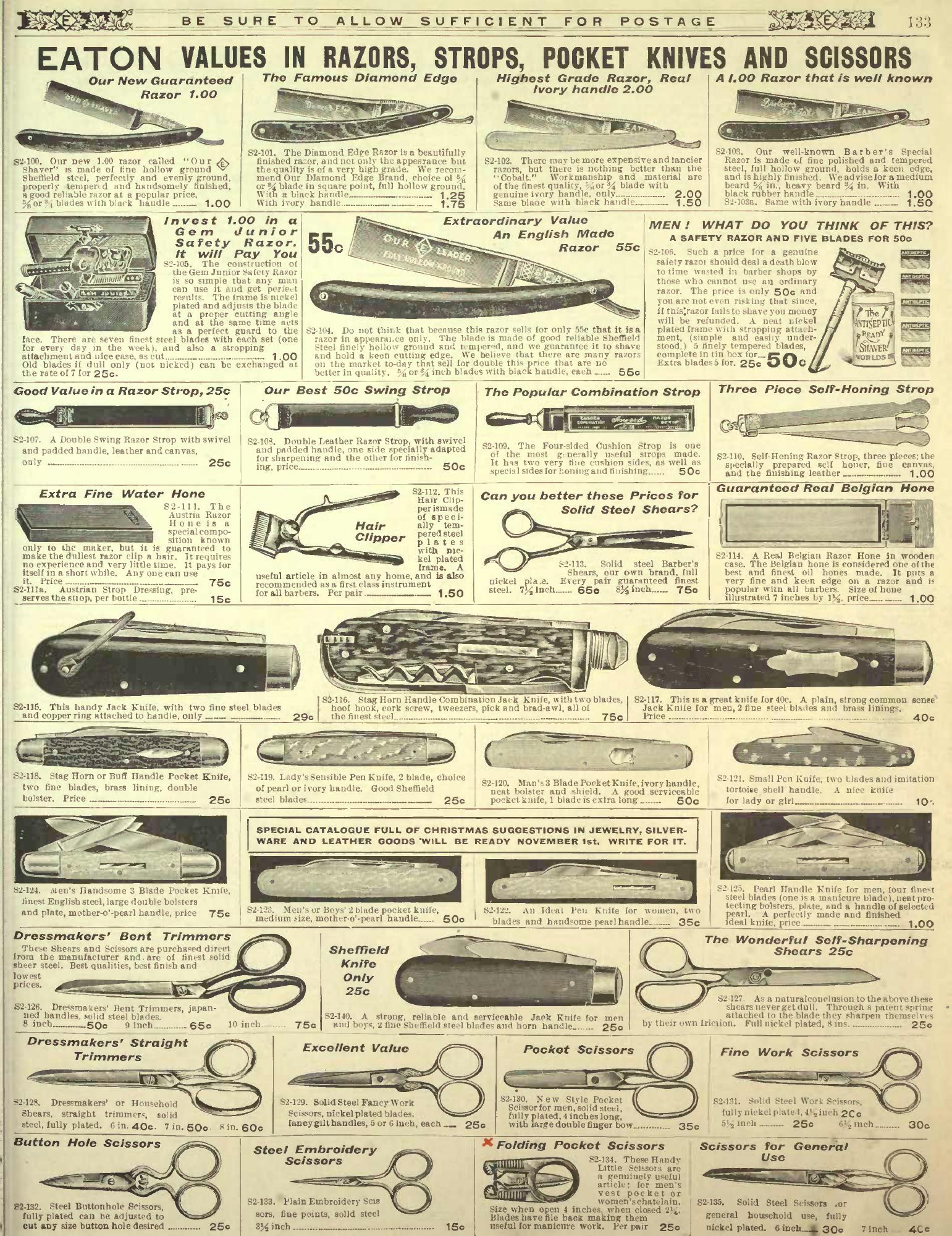
The $1 Gem Junior came with seven blades, a stropping attachment and a case. Seven dull blades could be exchanged for 25¢, provided they were not nicked.
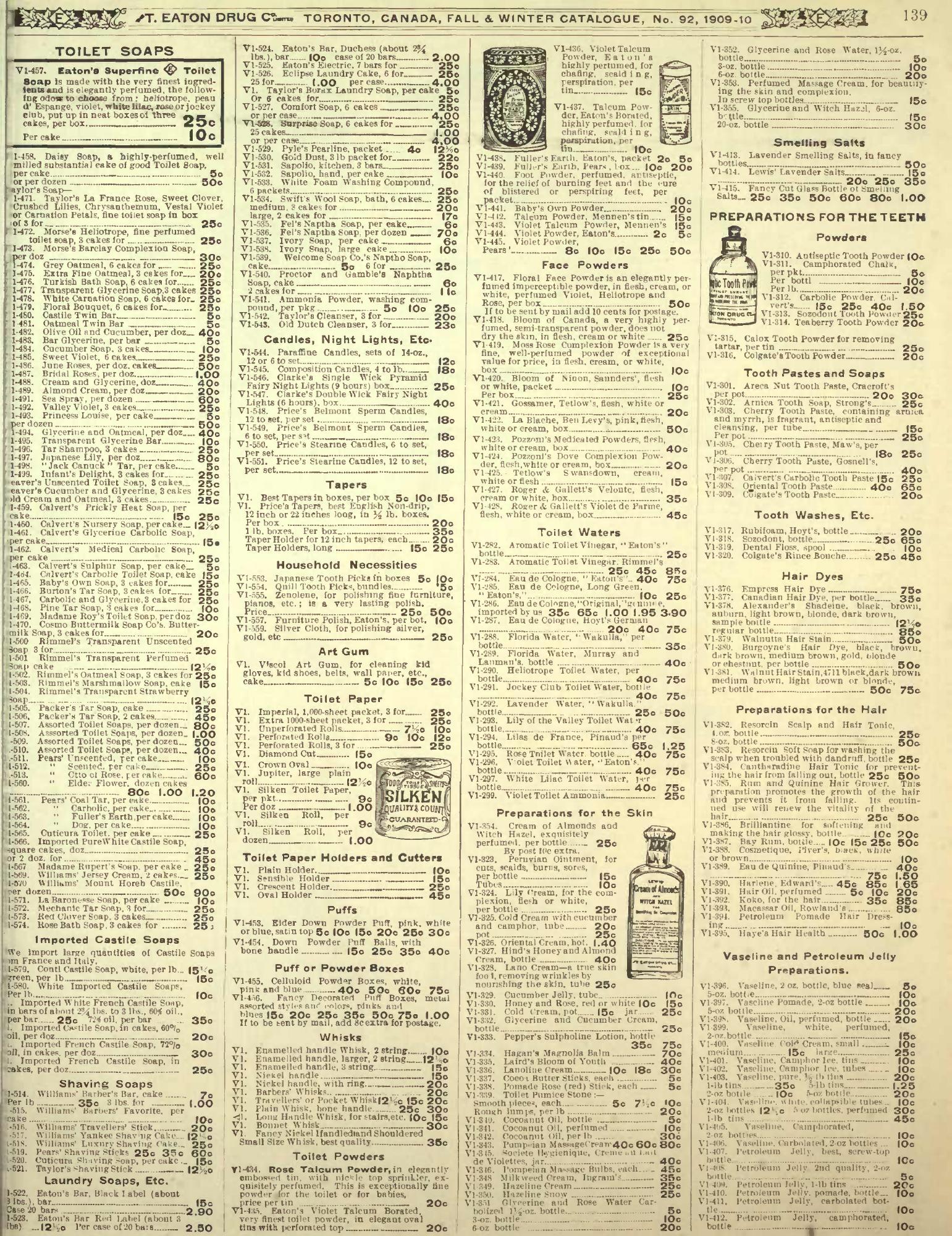
Williams’ Barber’s Bar cost 7¢ a cake. The same list offered Williams’ Travellers’ Stick at 20¢, Pears’ shaving sticks from 25¢ and Cuticura shaving soap at 15¢.
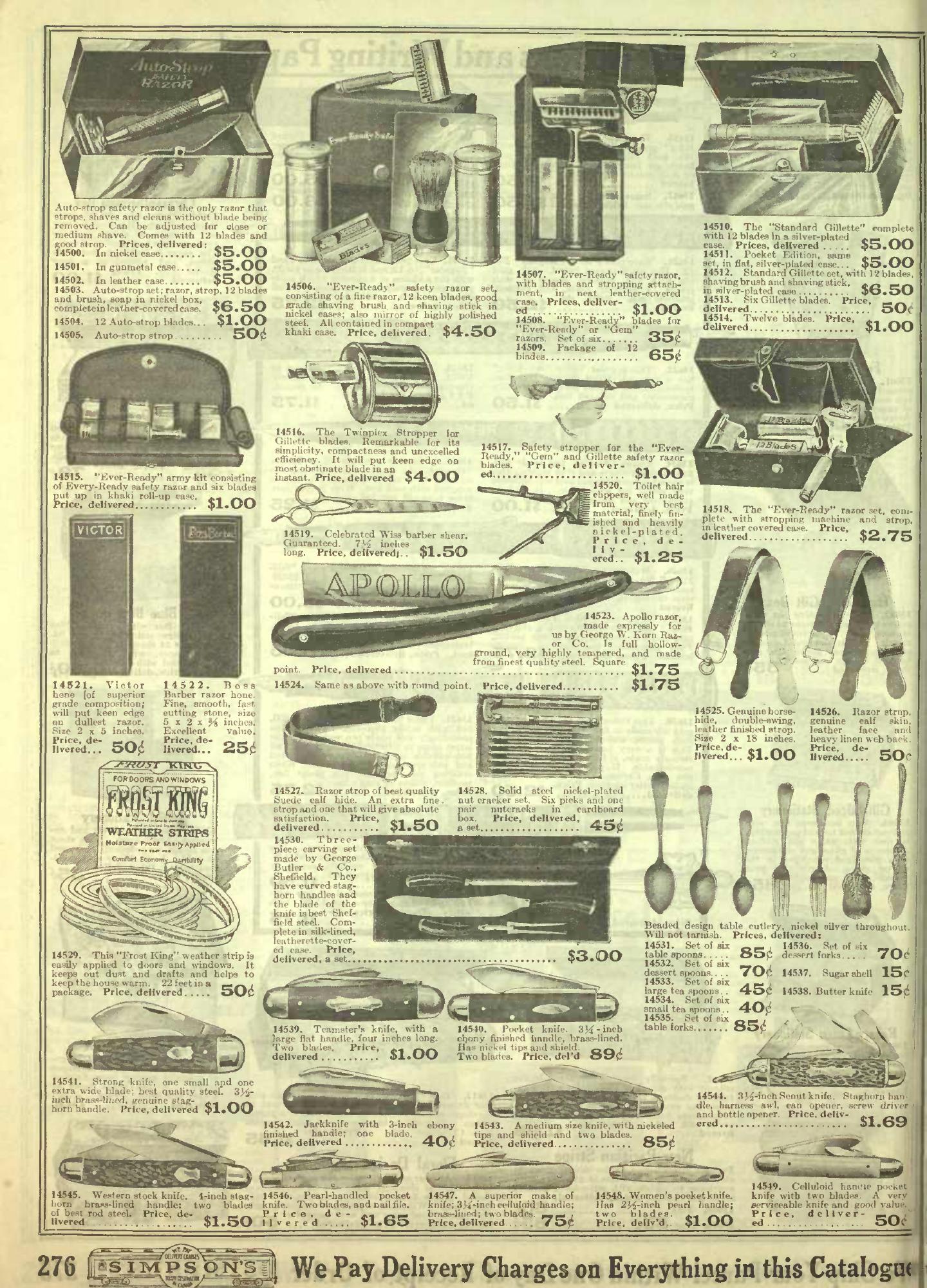
Simpson’s offered this Ever-Ready “army kit” for $1: a safety razor and six blades in a khaki roll-up case.
Canadian Pictorial, Vol. 3, No. 8 · July 1908
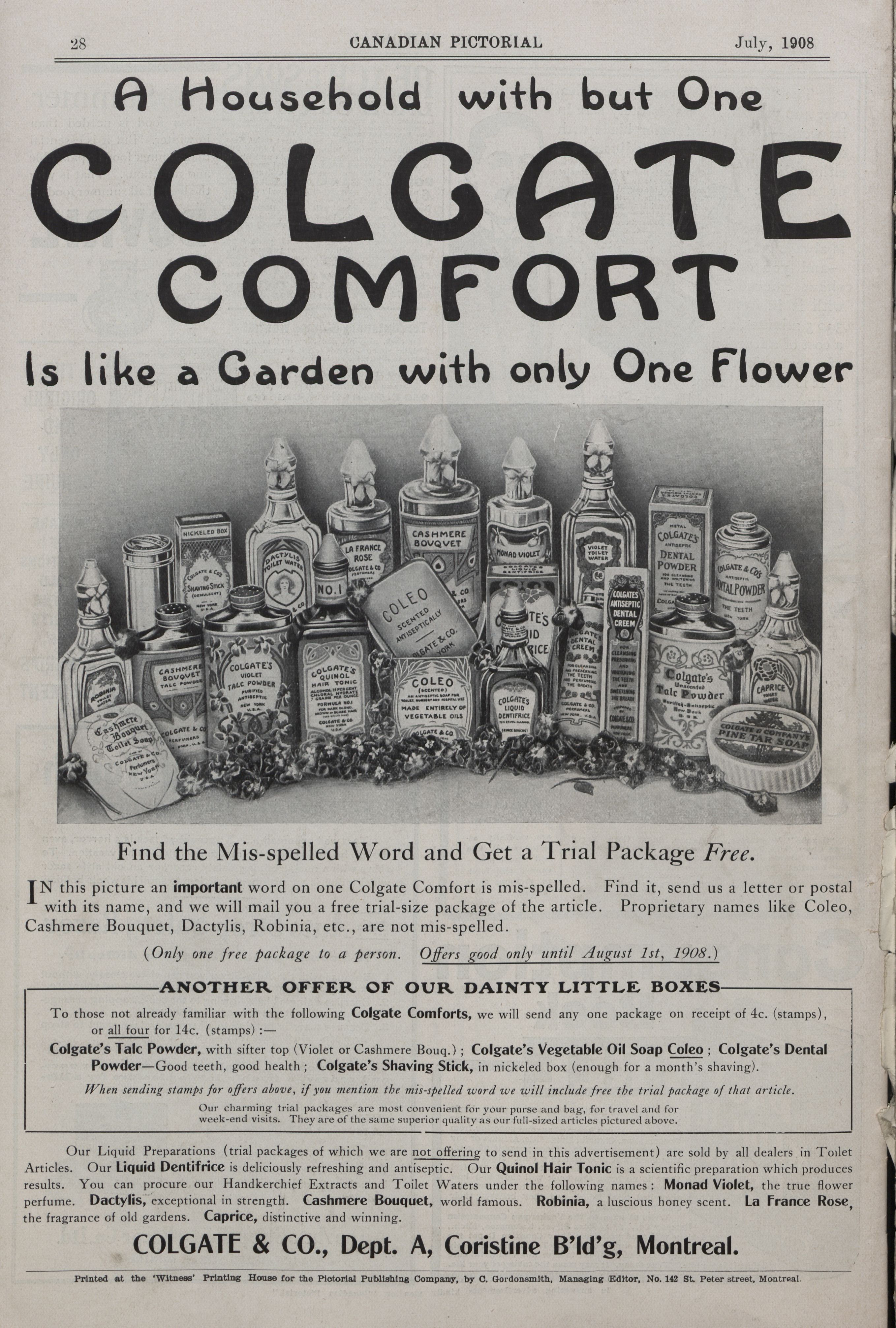
This full-page Colgate advertisement includes a shaving stick among an assortment of soaps, powders and toiletries. Readers could send for trial packages at the company’s Montreal address.
View the original on CanadianaCanadian Pictorial, Vol. 3, No. 8, p. 28
Canadian Pictorial, Vol. 3, No. 8, p. 28. Library and Archives Canada.
Newspaper clippings and one surviving kit show how razors reached Canadian soldiers during the two world wars.

A call for spare razors, with letters from Toronto and Sheffield and a list of collection points in Moncton. Donors could leave their razors at local shops or the Moncton Club.
Original publication not yet identified.
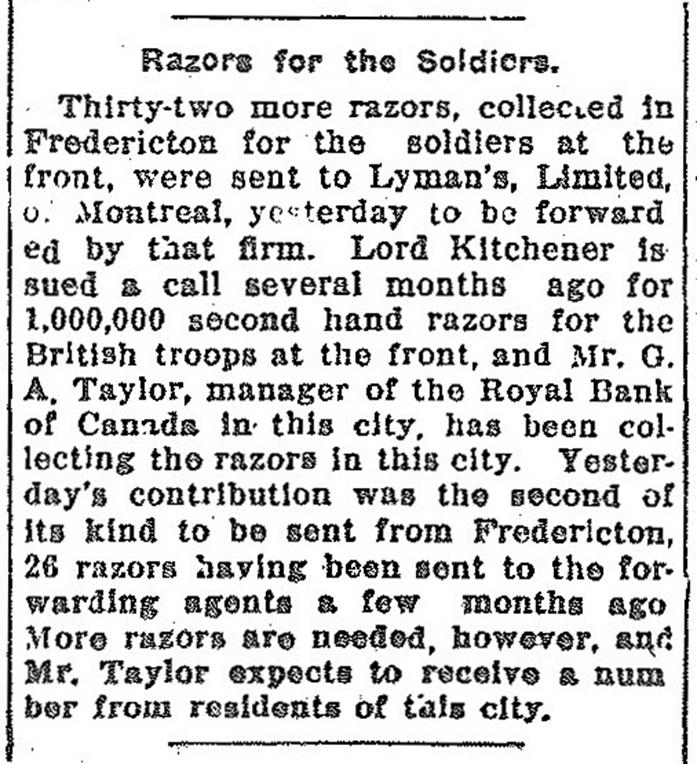
Thirty-two more razors collected in Fredericton were reportedly sent to Lyman’s Limited in Montreal for forwarding to troops. An earlier shipment had contained twenty-six.
Original publication not yet identified.
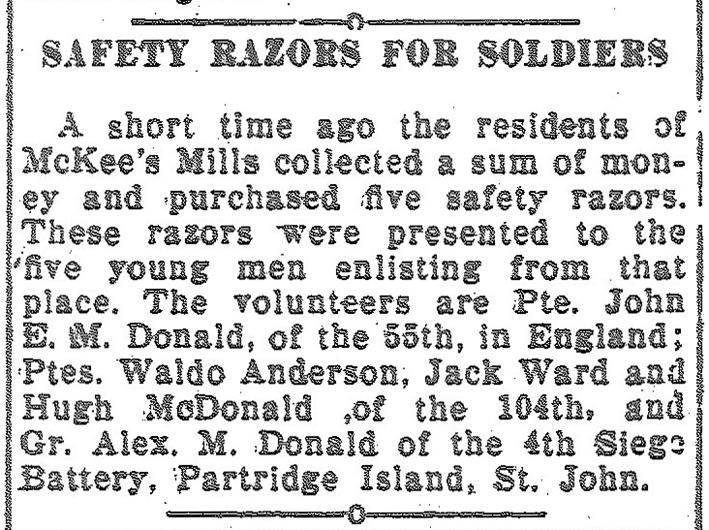
Residents of McKee’s Mills raised money for five safety razors, one for each of five local men who had enlisted. The men are named; the razor brand is not.
Original publication not yet identified.
A razor, a field mirror and a case marked R-189737. The Canadian Grenadier Guards Museum associates this kit with the 22nd Canadian Armoured Regiment during the Second World War.
See the kit at the Canadian Grenadier Guards Museum
Lieutenant Michael A. Hayes-Rivet, retired, The Gillette ‘Khaki Set’ Canadian Issued Shaving Kit During WW2, .